Why summer storage needs a plan
Most of the felt we see come back for repair hasnt been worn out at all. It has been stored badly. A hearth runner gets lifted in October when the house warms up, rolled tight with the face inwards, pushed into a black refuse bag and left at the back of a cupboard in Umhlanga or Muizenberg until the first cold night in May. By then the bag has sweated, the roll has set into a coil that wont lie flat, and on a bad year there are little bare tracks where moth larvae had a very good summer.
Wool felt is forgiving, but it is still wool. It likes air, it doesnt mind a bit of humidity if it can breathe, and it hates being sealed in plastic with whatever crumbs and skin flakes it picked up over winter. A good storage routine takes about twenty minutes per piece and saves you a lot of steaming and brushing later.
Clean before you roll
Never store felt dirty. Moths are not really after the wool alone, they are after the proteins and food traces sitting on it. Give each piece a slow pass with a soft brush in the direction of the surface, then vacuum on low suction with an upholstery head, no beater bar. Spot clean anything sticky with cool water and a little wool wash, blot it, and let it dry flat in shade. Direct sun on a wet patch can leave a ring, so a covered stoep is better than the lawn.
Let everything dry fully, at least a full day on the coast. Felt that feels dry on top can still be damp in the middle of a thick runner, and that trapped damp is where mildew starts. Our felt care notes cover spot cleaning in more detail if a piece has had a hard winter.
Roll, dont fold
Folding leaves creases that take weeks to relax, especially on dense runner and panel felts. Rolling is kinder. A few habits that help:
- Roll with the face side out, so the top surface is stretched slightly rather than compressed.
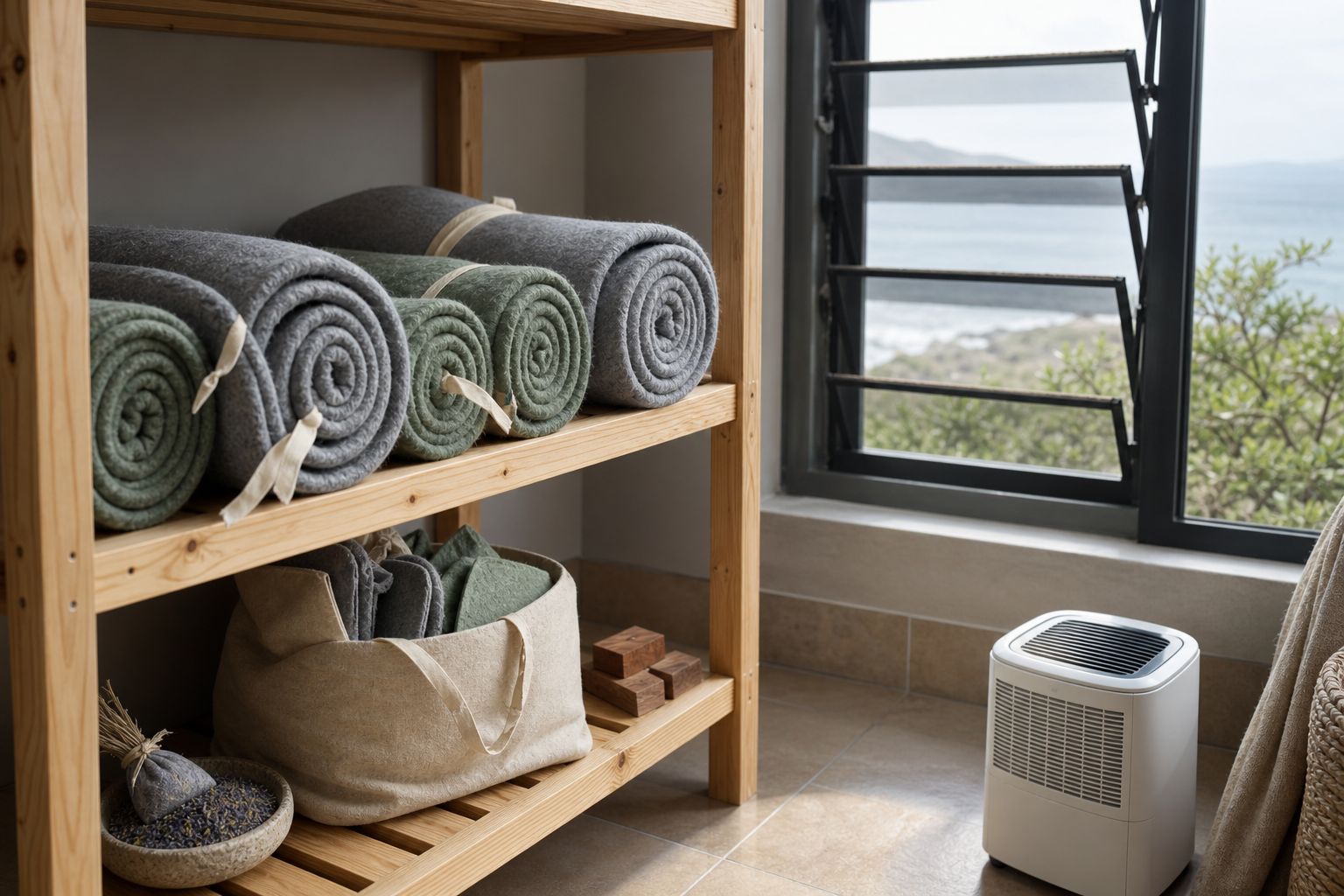
- Roll around a cardboard tube or a length of PVC pipe wrapped in a clean cotton sheet, which stops the centre from crushing.
- Tie the roll loosely with cotton tape in two or three places. Elastic and string both leave marks.
- Small pads, coasters and offcuts can be stacked flat with a sheet of acid free tissue between each layer.
If you are not sure about the length of a runner when it goes back down next winter, measure it now and write the size on a luggage tag. Our note on runner lengths that fit is useful if you are thinking of a new passage layout.
Breathable wrap, raised shelf
Wrap each roll in an old cotton sheet or an unbleached calico bag. Avoid plastic, including the vacuum storage bags sold for duvets, because they trap any moisture left in the fibres and crush the loft of the felt. Store the rolls on a shelf, not on the floor, and keep them away from outside walls that get cold and damp at night. A garage is fine inland, but on the coast a garage often gets salt air and condensation, so an inside cupboard is safer.
For moth protection, cedar blocks and dried lavender sachets help a little and smell much nicer than naphthalene, but they are not a magic shield. Lightly sand cedar blocks each season to wake the oil up. The real protection is a clean piece, a breathable wrap and a quick check every month or two.
Humidity on the coast
In Durban, Ballito and parts of the Garden Route, summer indoor humidity can sit high for weeks. If a cupboard smells musty, open it on dry days, leave a small gap at the door, or run a compact dehumidifier in the room for a few hours a week. Silica gel tubs work in small spaces, just remember to dry them out in the oven when they change colour. Inland in Gauteng the problem is usually the oposite, dust rather than damp, so a tight cotton wrap matters more than airflow.
Bringing it back out in winter
When the first cold front arrives, unroll the felt and let it relax flat for a day or two before it goes under furniture. A light mist of water and a steamer held a hand width away will ease any curl at the ends. Brush it once more, check the underside for small holes or webbing, and put it back down. If something looks wrong, take a photo in daylight and send it through our contact form with the textile name, we can usually tell from a photo whether it needs a repair, a re-edge or just a good brush. You can also browse the Hearth Runner and Entry Mat Soft pages for the care notes that ship with each piece.