Why hard plinths disrupt quiet rooms
Gallery plinths, ledges and display blocks are essential for showing objects and art, but their hard surfaces reflect sound, pick up nicks and marks quickly and can make a white-walled room feel brittle. If you walk through a show where every footstep and dropped programme is amplified, you know this effect. The sharpness steals attention from the work.
In Woodstock, where our sample library sits a few roads from several contemporary galleries, this problem often comes up. Curators and designers ask how to soften a space so people linger and listen instead of glancing and moving on. The answer is never only in the lighting or the wall colour.
Why we use dense merino felt for plinths
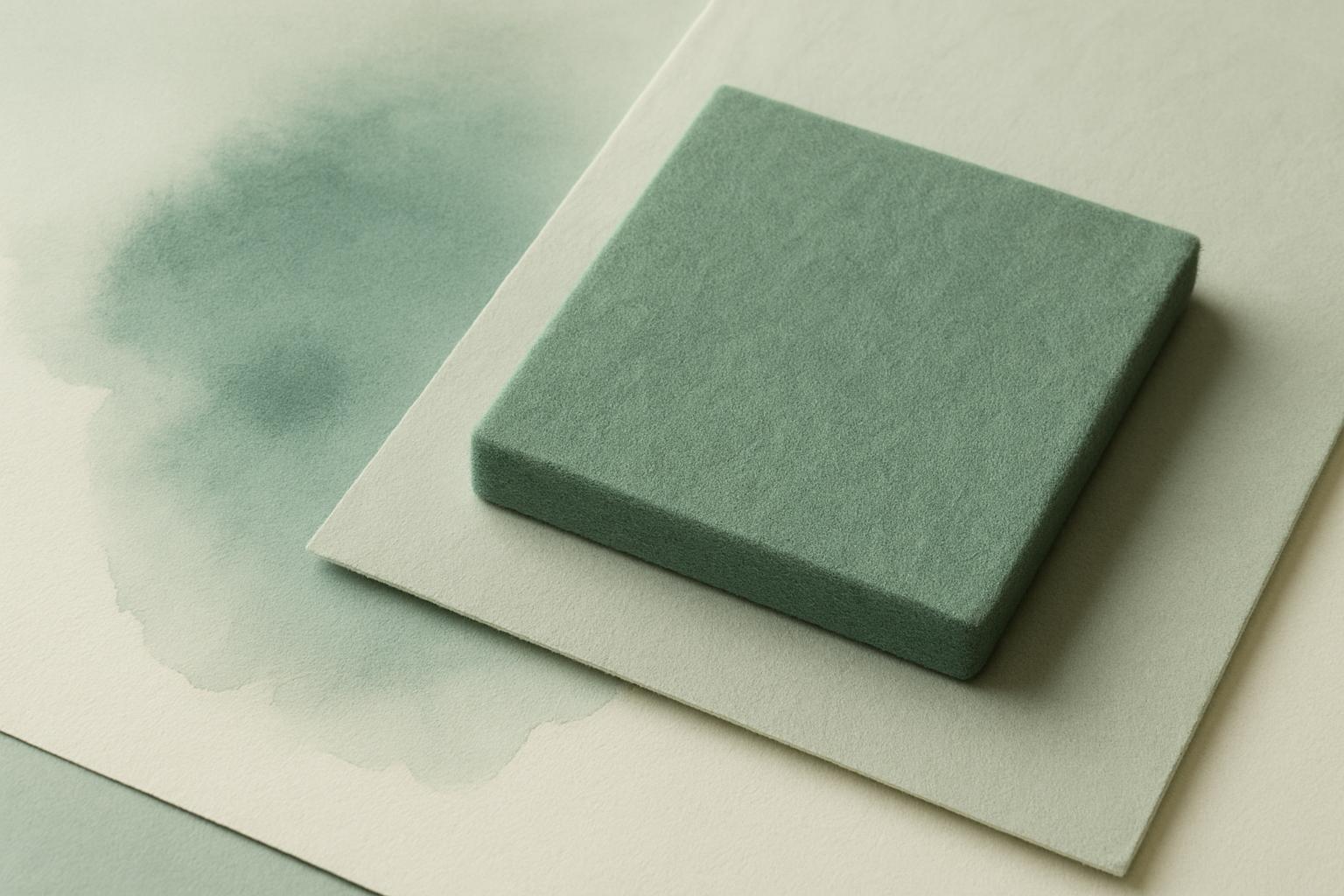
We developed Merino Plinth Felt specifically for horizontal surfaces that need to be quiet, subtle and inviting to touch. The felt is a dense merino-blend pressed for both resilience and softness, so you do not see finger dents or scuffs, and objects land with a gentle sound instead of a clatter.
Because felt is a non-woven textile, it can be cut to size with a straight edge and will not fray, so each plinth or ledge gets a crisp finish. Our cut pieces are usually fitted loose for seasonal shows or bonded with a low-tack adhesive if you want a clean, removable install. Wool felt is naturally hard to ignite, making it suitable for exhibition spaces, but it must be kept clean and aired to avoid mustiness.
A gallery install that changed the mood
Last spring, a Woodstock gallery preparing for a sculpture show needed the plinths to disappear as much as possible. The existing white blocks were echoing every sound and picking up marks from visitors' bags and the sculptures themselves.
We cut Merino Plinth Felt in Stone Wash, trimmed to each plinth edge. The felt muted footstep and conversation noise, and the soft, neutral colour did not compete with the work. The curators reported that visitors spent longer at each piece, and the space felt calm even during busy openings.
Steps for measuring and fitting plinth felt
If you are preparing for an exhibition, start with accurate measurements and a clean, dry surface. Here is how we recommend you approach a new fit, whether you install yourself or ask our team to help.
Choose a Merino Plinth Felt colour that complements your objects and lighting. Always ask for a sample to check in your own space, as gallery daylight shifts hues more than most rooms.
- Measure the length and width of each plinth or ledge, allowing a slight overhang if you want full coverage
- Decide if you want the felt loose or lightly fixed. Blu-Tack or double-sided tape works for temporary shows
- Brush or vacuum the felt gently before use, especially if you are reusing it
- Store flat and dry between shows, never folded or sealed in plastic
- If needed, spot clean with cool water and blot, not rub
What to send us for a felt plinth project
To help you specify or order Merino Plinth Felt for your gallery, send us a message using our contact form. Attach a photo of your plinths or ledges and list the number, size and expected use.
If you know your preferred colourway, mention it, or ask for samples to compare in your space. For large or complex installs, we can arrange a site visit from the Woodstock studio or connect you with our fitting team nearby.